
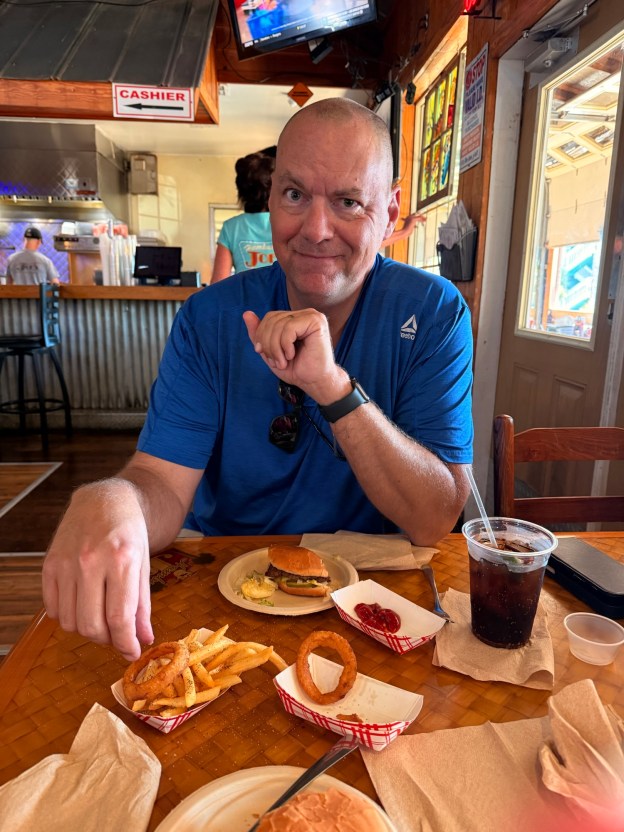
Some of our friends like to tease us because we don’t eat dinner at seven or eight o’clock. Instead, we usually go out for lunch or have an early dinner. Part of this comes from my preferred eating schedule. I tend to skip breakfast, eat one full meal, and then have a smaller meal later in the day. Eating earlier just fits that rhythm and I end up feeling better when I am not going to bed with a full stomach.
But there’s another benefit. It’s often much cheaper.
In fact, if we’re careful, eating out can sometimes approach the cost of cooking dinner at home. That’s especially helpful right now because the kitchen in our beach condo is… let’s call it “compact.” Cooking full meals there isn’t super practical. Luckily, over time we’ve developed a few habits that make restaurant meals surprisingly affordable.
Timing Is Everything
One of the biggest advantages of flexible schedules is being able to eat when restaurants are trying to attract customers. Lunch menus are almost always cheaper than dinner menus. Early bird specials, weekday specials, and even senior menus can dramatically lower the price of a meal. Many restaurants offer essentially the same food earlier in the day for several dollars less per plate. When you aren’t tied to a strict work schedule, it’s easy to take advantage of that.
Split the Entrée
American restaurant portions are enormous. Katie and I frequently split a single entrée, especially at lunch. In many places, one plate is easily enough food for two people. Not only does this reduce the cost of the meal, it also avoids the “restaurant overstuffed” feeling that often follows a big dinner. Sometimes we’ll add an extra salad or soup for one of us or add an appetizer (Queso!) if we need a little more food, but often the single entrée works just fine.
Skip the Alcohol
One of the biggest hidden costs in restaurant dining is alcohol. A single cocktail can easily cost $10 to $15. Two drinks each can double the price of a meal. We don’t drink alcohol so this is no great sacrifice for us, but it keeps the bill dramatically lower than what some of our friends experience. Diet soda is my vice, but even there I’m careful. When a soda costs $5+ after tax and tip, I usually skip it. At that price, I can buy drinks for a week at home.
Fast Casual Is a Sweet Spot
Fast casual restaurants can be a great middle ground. They’re usually healthier than fast food, but significantly cheaper than traditional sit-down restaurants (and not just the price of the food. As a former waiter/bartender, I tend to tip on the high range so eating in a place with with no service can be an automatic 20-25% discount). And many of them offer high-quality food with customizable options. It’s not fancy, but it’s often exactly what we want.
Gift Cards = Instant Discount
When we know we’re going to eat somewhere frequently, we look for discounted gift cards. Costco and Sam’s Club often sell restaurant gift cards at about 20 percent off face value. Buy a $100 gift card for $80, and you’ve immediately reduced every meal by twenty percent. You can find similar deals online, but the warehouse clubs make it easy.
Loyalty Programs
We also sign up for loyalty programs at places we visit often. I’m not going out of my way to spend money just to earn points. But if we’re going to eat somewhere anyway, letting them track our purchases often results in free appetizers, discounts, or occasional free meals. If the restaurant benefits from my repeat business, I’m happy to sit back and collect the perks.
Stacking the Savings
None of these strategies is revolutionary by itself. But when you combine them, the savings add up.
- Early dining prices.
- Splitting entrées.
- Skipping drinks, especially alcohol.
- Discounted gift cards.
- Loyalty rewards.
Start stacking those all together and the cost of eating out can start to approach the cost of cooking at home. And sometimes it’s actually cheaper than buying groceries for a meal you have to prepare and clean up yourself. That might be an unpopular opinion in FI circles. But when you enjoy the experience, control the cost, and avoid the dishes?
Here is an extreme example: I like Torchy’s Tacos and, once a year around Christmas, you can qualify for a “Golden ticket” card that gets you free queso for the entire next year. You just have to spend $200. Seems like a lot, but I just buy a gift card for that amount (and earn Torchy’s rewards points as well as 4x CC points). Throughout the year I will go in for breakfast occasionally and get free queso and buy a taco or two, using the gift card (and receiving additional rewards points). Katie and I also go in for lunch/dinner occasionally, especially when there is a special (of course I get e-mails about specials when they are trying new items or encouraging additional benefits). Last year… stacking free food, loyalty rewards, CC points, food specials (and avoiding the bar), allowed us to eat there more than two dozen times! And I had to work to finish the original spend. Maybe that is extreme, but eating almost 30 meals for $200? In 2025? It feels like a pretty good deal to me 🙂
What are some ways that you have saved money so that you can splurge on meals out?
Discover more from Early Exit, Open Road
Subscribe to get the latest posts sent to your email.
