Category Archives: Traveling

Overall category

An Unpopular Opinion About Restaurants

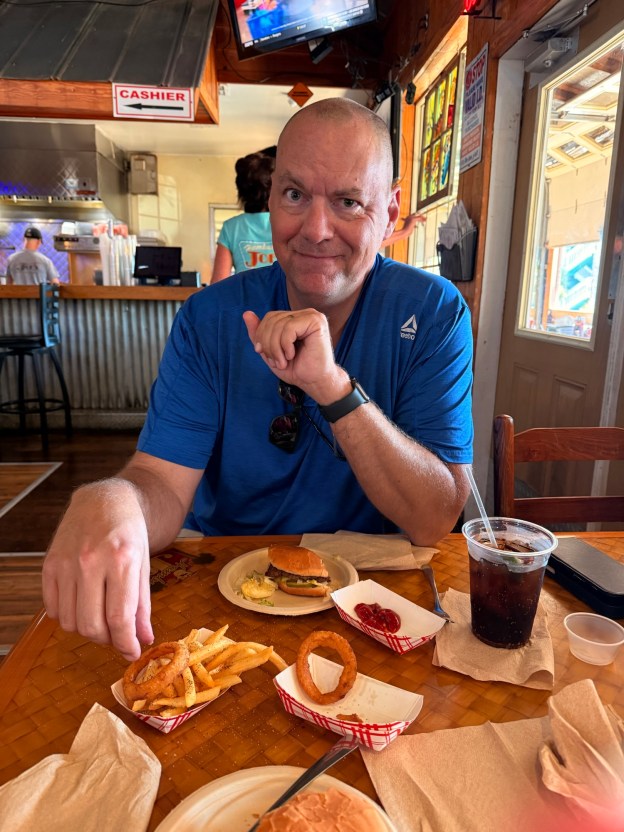
Some of our friends like to tease us because we don’t eat dinner at seven or eight o’clock. Instead, we usually go out for lunch or have an early dinner. Part of this comes from my preferred eating schedule. I tend to skip breakfast, eat one full meal, and then have a smaller meal later in the day. Eating earlier just fits that rhythm and I end up feeling better when I am not going to bed with a full stomach.

But there’s another benefit. It’s often much cheaper.

In fact, if we’re careful, eating out can sometimes approach the cost of cooking dinner at home. That’s especially helpful right now because the kitchen in our beach condo is… let’s call it “compact.” Cooking full meals there isn’t super practical. Luckily, over time we’ve developed a few habits that make restaurant meals surprisingly affordable.

Timing Is Everything

One of the biggest advantages of flexible schedules is being able to eat when restaurants are trying to attract customers.  Lunch menus are almost always cheaper than dinner menus. Early bird specials, weekday specials, and even senior menus can dramatically lower the price of a meal. Many restaurants offer essentially the same food earlier in the day for several dollars less per plate. When you aren’t tied to a strict work schedule, it’s easy to take advantage of that.

Split the Entrée

American restaurant portions are enormous. Katie and I frequently split a single entrée, especially at lunch. In many places, one plate is easily enough food for two people. Not only does this reduce the cost of the meal, it also avoids the “restaurant overstuffed” feeling that often follows a big dinner. Sometimes we’ll add an extra salad or soup for one of us or add an appetizer (Queso!) if we need a little more food, but often the single entrée works just fine.

Skip the Alcohol

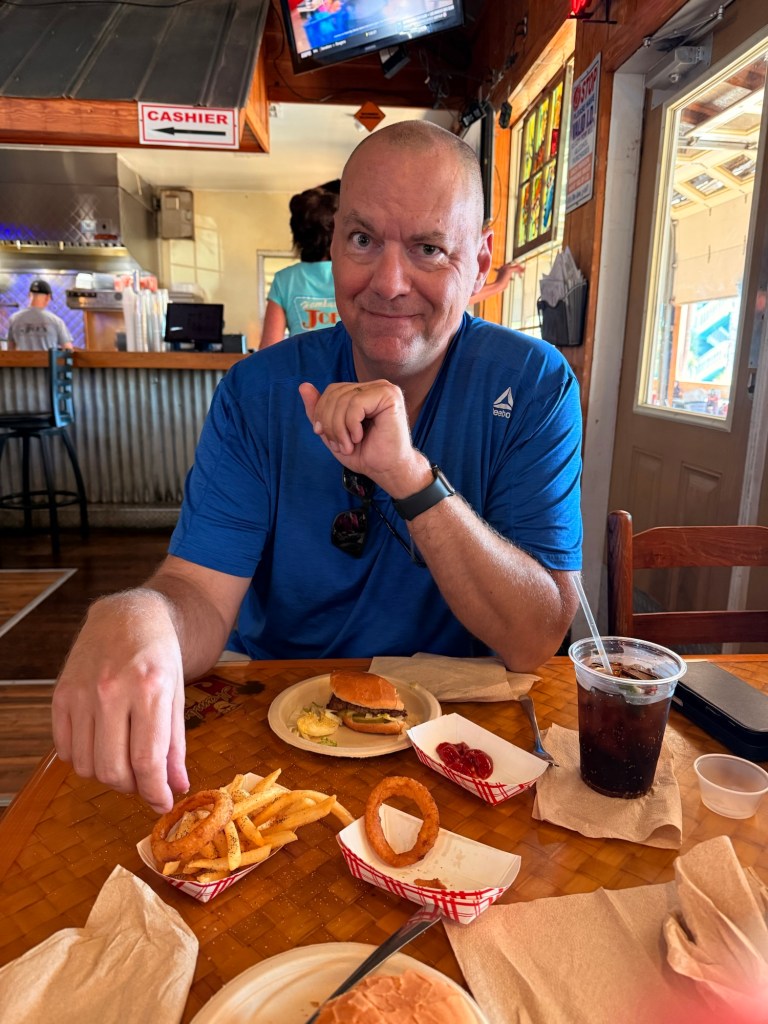
One of the biggest hidden costs in restaurant dining is alcohol. A single cocktail can easily cost $10 to $15. Two drinks each can double the price of a meal. We don’t drink alcohol so this is no great sacrifice for us, but it keeps the bill dramatically lower than what some of our friends experience. Diet soda is my vice, but even there I’m careful. When a soda costs $5+ after tax and tip, I usually skip it. At that price, I can buy drinks for a week at home.

Fast Casual Is a Sweet Spot

Fast casual restaurants can be a great middle ground. They’re usually healthier than fast food, but significantly cheaper than traditional sit-down restaurants (and not just the price of the food.  As a former waiter/bartender, I tend to tip on the high range so eating in a place with with no service can be an automatic 20-25% discount). And many of them offer high-quality food with customizable options. It’s not fancy, but it’s often exactly what we want.

Gift Cards = Instant Discount

When we know we’re going to eat somewhere frequently, we look for discounted gift cards. Costco and Sam’s Club often sell restaurant gift cards at about 20 percent off face value. Buy a $100 gift card for $80, and you’ve immediately reduced every meal by twenty percent. You can find similar deals online, but the warehouse clubs make it easy.

Loyalty Programs

We also sign up for loyalty programs at places we visit often. I’m not going out of my way to spend money just to earn points. But if we’re going to eat somewhere anyway, letting them track our purchases often results in free appetizers, discounts, or occasional free meals. If the restaurant benefits from my repeat business, I’m happy to sit back and collect the perks.

Stacking the Savings

None of these strategies is revolutionary by itself. But when you combine them, the savings add up.

  • Early dining prices.
  • Splitting entrées.
  • Skipping drinks, especially alcohol.
  • Discounted gift cards.
  • Loyalty rewards.

Start stacking those all together and the cost of eating out can start to approach the cost of cooking at home. And sometimes it’s actually cheaper than buying groceries for a meal you have to prepare and clean up yourself. That might be an unpopular opinion in FI circles. But when you enjoy the experience, control the cost, and avoid the dishes?

Here is an extreme example:  I like Torchy’s Tacos and, once a year around Christmas, you can qualify for a “Golden ticket” card that gets you free queso for the entire next year.  You just have to spend $200.  Seems like a lot, but I just buy a gift card for that amount (and earn Torchy’s rewards points as well as 4x CC points).  Throughout the year I will go in for breakfast occasionally and get free queso and buy a taco or two, using the gift card (and receiving additional rewards points).  Katie and I also go in for lunch/dinner occasionally, especially when there is a special (of course I get e-mails about specials when they are trying new items or encouraging additional benefits).  Last year… stacking free food, loyalty rewards, CC points, food specials (and avoiding the bar), allowed us to eat there more than two dozen times!  And I had to work to finish the original spend.  Maybe that is extreme, but eating almost 30 meals for $200?  In 2025?  It feels like a pretty good deal to me 🙂

What are some ways that you have saved money so that you can splurge on meals out?
National Parks: America’s Best Travel Bargain?

National parks are amazing.  Nature. Beauty. Solitude.

When a country decides that a particular place is so unique that it deserves to be preserved at the national level, that’s a pretty good signal that it’s worth visiting. You’re very unlikely to be disappointed no matter which parkland you set your sights on.

It doesn’t hurt that national parks are also some of the most affordable places to travel. After all, nobody had to build expensive roller coasters or animatronic dinosaurs to convince people to come see the Grand Canyon or hike through Yellowstone. The appeal is completely natural. And many of the costs that do exist are taxpayer-supported, which means access is surprisingly inexpensive. In fact, for about $80 you can buy an annual National Parks pass that covers entry to almost every national park in the country for an entire year. Visit just three or four parks and the pass practically pays for itself.  That’s a pretty good travel deal.

The Ones We Missed

Sometimes I regret that during our whirlwind quest to get our boys to all 50 states before they graduated high school, we were often moving too quickly to detour into national parks, but when you’re trying to knock out a lot of states in a limited time, efficiency starts to win over exploration.

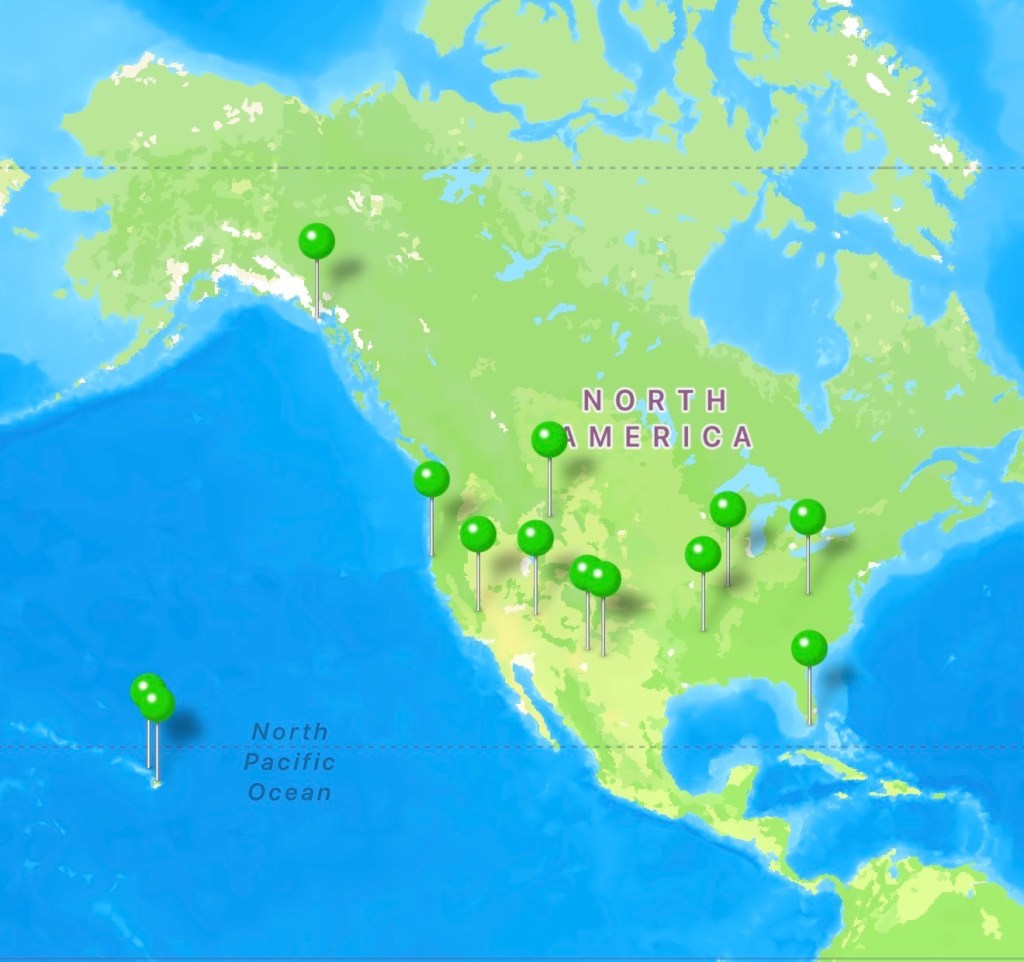
As a result, my personal national park count is only 13 out of the 63 parks currently in the system. That number always feels a little low when I see maps from people who have visited all of them.

Right now, though, I’m okay with that.There are some amazing people documenting their journeys through every national park (like Renee Roaming or the couple behind Trip of a Lifestyle). I love following their adventures, but visiting all 63 parks isn’t our immediate goal. For now, we’re happy to encounter them organically as part of our slomadic journey.

A Day Trip to Congaree

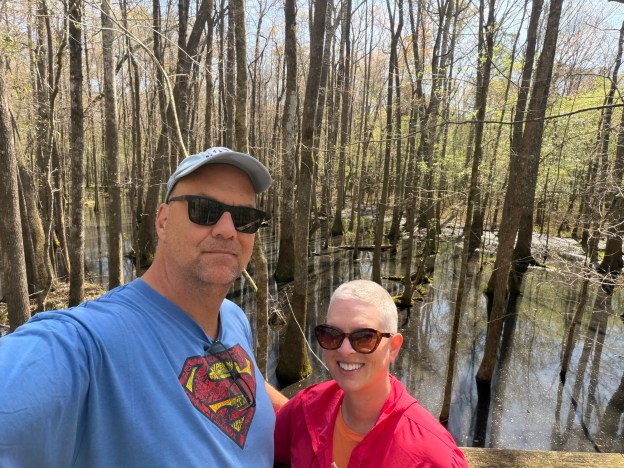
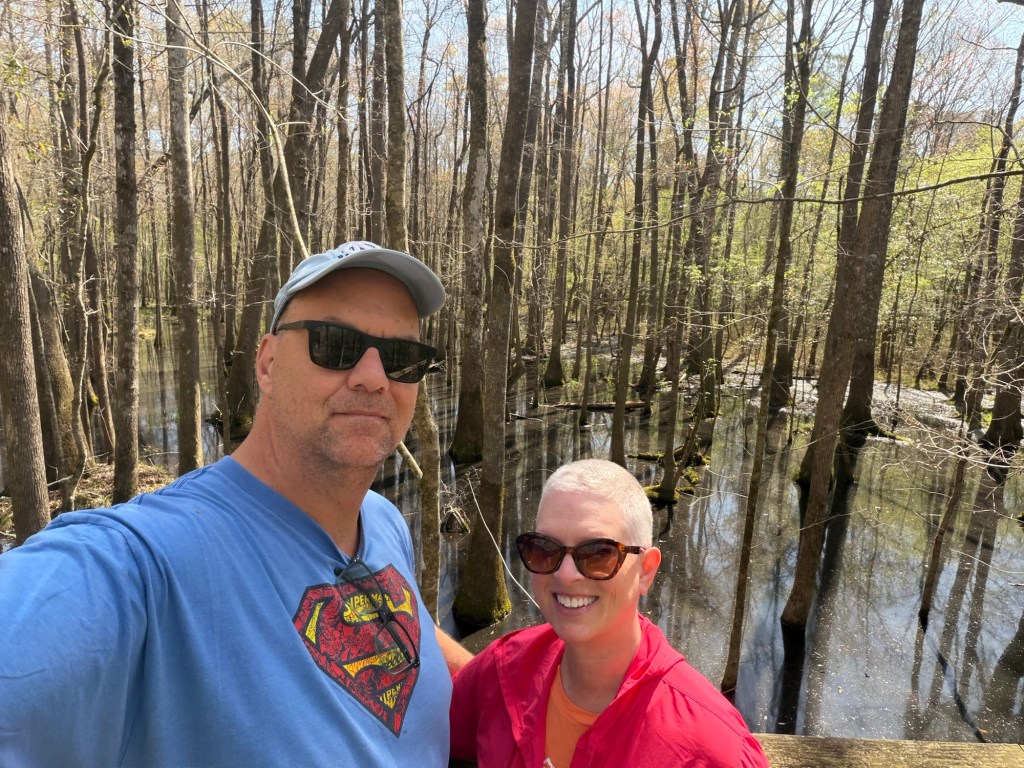
That brings us to this week’s trip to Congaree National Park in South Carolina. One guidebook we checked out described Congaree as “the least popular national park.” That may or may not be fair, but it definitely made us curious. We had beautiful weather, so we packed up and drove from Myrtle Beach for a long day trip.

Getting there is part of the experience. For a while it feels like you’re just driving through rural South Carolina at random.  Down narrow roads, unmarked turns, mailboxes that seem disconnected from any visible house. And then, almost out of nowhere, the park entrance appears.

Congaree is different from many national parks. There aren’t scenic drives winding through mountains or overlooks where you can simply park and take in the view. This park is about being in the landscape.  As soon as you leave the visitor center, you’re walking.

It’s a swamp.  Ok, they repeatedly call it an “old growth bottomland hardwood forest”, but it is a swamp :). Which means bug spray is highly recommended (even though the park’s famous “Mosquito Meter” rated the day as only mild). 

Fortunately, Congaree has a raised boardwalk trail that lets you explore much of the park without sinking into the mud. It winds through towering hardwood forests (love those loblolly pines!) and past bald cypress trees rising out of the water. Part of the loop was under construction when we visited, so we got to go off the boardwalk and onto a dirt trail for a while. That meant stepping over cypress knees, dodging muddy patches, and occasionally wondering whether we were still on the trail.

But that’s the point. National parks aren’t meant to be perfectly polished experiences. They’re meant to remind you that nature is still bigger than you are.

Number Fourteen

By the end of the day we had checked off National Park #14. Not exactly a speedrun. But honestly, that’s fine. One of the unexpected gifts of this stage of our life is that we don’t have to rush anymore. Instead of racing through destinations, we can take the long walk, read the interpretive signs, and linger on the boardwalk a little longer.

The parks will still be there tomorrow. As we continue moving around the country, I’m hoping to gradually add more of them to the list. Not because I need to collect all 63 and not because they might just be the best travel value in America.  Because I can honestly say that I have enjoyed every one I have been to.

Beautiful places. Minimal cost. And nothing on the itinerary except the next step on the trail.

Eric on a loblolly pine.
🩷

The Cost of Staying Fit on the Road

One thing I didn’t fully anticipate when we started this “slomadic” life was how complicated gym access would become.  When you live in one place for twenty years, you pick a gym and forget about it. When you move every few months, the equation changes. Suddenly you’re comparing day passes, initiation fees, commute time, and whether the place even has the equipment you actually use.

A lot of nomads default to Planet Fitness, and I understand why. For around $15 a month (sometimes $25 for the “Black Card” with nationwide access), it’s cheap and ubiquitous. You can find one almost anywhere in the country. For someone focused on treadmills and weights, it’s a simple solution and for some “van lifers” it is worth it just for the showers 🙂 

The problem? We swim.

Most Planet Fitness locations don’t have pools, much less lap lanes suitable for serious swimming. For me, that makes the bargain less attractive. After all, saving money only works if the service provided actually fits your needs.

Omaha: The YMCA Win

When we were in Omaha, I joined the downtown YMCA. It was a great facility. Clean, friendly, good lap pool, and within walking distance of our apartment. The cost was $30 a month which was absolutely reasonable for what I was getting.

It checked all the boxes:
• Lap swimming
• Strength training
• Classes (if I wanted them)
• Convenient location

For that price, I didn’t think twice.

Myrtle Beach: Sticker Shock

When we arrived in Myrtle Beach, I assumed I’d do something similar. Some teachers I work with here recommended the local YMCA, so I checked it out.

The facility was fine, but the pricing made me pause. Adult memberships start at $69 a month, plus a joining fee of $50. That’s not outrageous in the grand scheme of things (and to be fair, it includes a pool, fitness center, and classes) but for someone who is constantly coming and going, it felt a bit steep.

The bigger issue? Location. It would have been a 20–25 minute drive each way from where we’re staying. That’s nearly an hour round trip before I even get in the water. For a morning swim, that matters.  After all, at some point, you’re not just paying in dollars, you’re paying in time, convenience, and other friction points.

The Rec Center Surprise

So I started looking at local recreation centers. Their monthly rates were significantly lower than the YMCA, and several were much closer. After a bit of research, I found one that opened at 6:00 a.m., perfect for getting a swim in before work.

Then something interesting happened.

The staff member I spoke with suggested that, given how often I travel, I might be better off paying the $3 daily rate instead of committing to a monthly membership.

Three dollars. That changes the math.  If I swim 10–12 times a month, that’s $30–$36 total. No initiation fee. No guilt when I’m out of town. No feeling like I’m “wasting” a membership.  Katie can even join me when she gets the bug without needing to commit ahead of time.

I combined that with:
• The workout room included at our resort
• Free walking and running on the beach
• Occasional bodyweight workouts

And suddenly we had a flexible, low-cost system that fit our lifestyle much better than a traditional membership.

The Real Lesson

Of course this isn’t really about gyms. It’s about intentional spending.

Planet Fitness is a great solution…for some people. The YMCA is a great solution…for others. But in a “slomadic” life, flexibility often beats optimization.

In Omaha, $30 a month at the Y was perfect.
In Myrtle Beach, $3 per visit plus beach workouts is better.

Same goal. Different environment. Different answer.

One of the hidden challenges of early retirement and slow travel is that we constantly have to re-evaluate our assumptions. What worked in one city may not make sense in the next.

And that’s okay.

The goal isn’t to find the cheapest option. It’s to find the option that aligns with your priorities — fitness, convenience, budget, and enjoyment.

For me, swimming in the morning and walking on the beach in the afternoon beats driving across town to justify a membership fee. Sometimes the best financial move isn’t committing to the lowest price. It’s choosing the most adaptable solution.

What about you? If you travel, or even if you don’t, how do you handle fitness access? Monthly memberships? Day passes? Home workouts? 

How Do You Pack for Months Away from Home?

3 Feb 2026 This post was written last fall. We are now preparing to do it again this week when we move to Myrtle Beach!

When we started planning this nomadic adventure, the question came up: How on earth do you pack for months away from home?

Surprisingly, it’s not that different from how I pack for a week-long business trip… at least in some categories. After all, laundry and Amazon delivery still exist in other states. And, if I’m honest, even when I’m home for months at a time, I usually catch myself wearing the same rotation of clothes over and over… the ones that are rewashed and put back on the top of the pile.  Here’s how it breaks down.

The Almost-the-Same Stuff

Clothes
My “packing for months” wardrobe looks a lot like my “packing for a week” wardrobe, just with a few extras to account for different weather. If it works in July, I throw in a hoodie for October. Done.  (In some places those of us who are 6’7” and 270 lbs have to be careful because there isn’t a ready market for extended size clothes if we need to buy something in a pinch, but in Omaha? I think I will be OK) 

Katie says: I bring my big pink suitcase, Bertha, that I usually bring to Hawaii. It holds my clothes, swimsuits, snorkels, water shoes, sunscreen and the like. I also bring the medium and small pink suitcases and a blue one as well. Also some duffle bags. I have to have SOME variety in my clothes!

Technology
I’ve already got my go-to travel tech bag: laptop, chargers, cables, noise-canceling headphones (for planes), bone conduction headphones (for everything else). The one new addition for this trip? A green screen backdrop. I bought it during COVID for working from home, and it’s been a lifesaver for quick, professional-looking Zoom calls, no matter what shenanigans are happening behind me.

Katie says: I pretty much do the same thing. I have a travel monitor as well as some tech stuff for my cameras.

Entertainment
Sure, most of our fun will come from exploring new places, but I’m also bringing a hard drive full of movies to go along with our subscription services.  Over the years, I have converted most of my books to digital, so my library lives on my phone already. It was a little sad selling my physical fiction collection to Half Price Books for pennies on the dollar, but at least my professional library found a good home.

Katie says: I brought coloring stuff to Nebraska but did not use it. I found myself taking pictures all the time and then editing those so I could share them with the world. I also had lunch with my cousin Scott if Eric was working. One thing about Omaha was that the entertainment was RIGHT THERE!

The Pretty-Different Stuff

Recreation
Katie and I love stand-up paddle boarding, so earlier this year we swapped our DFW paddle club membership (which we loved) for a couple of inflatable boards. They’re coming with us. We also swim for workouts, so our swim bags—goggles, suits, fins—are on the list. Omaha has a few good lap-swimming spots I’ve already scoped out.

Home Comforts
We’re renting furnished places, so we don’t need to bring much, but a few things made the cut: pillows (Katie is picky, and I like extras), our own sheets (because why not?), and our refrigerator magnet collection. We’ve been collecting these on road trips for years, they pack easily, and they’ll make any kitchen feel like ours. One splurge item: our countertop ice machine. I’ve gotten way too used to having perfect ice for my daily diet sodas.

Katie says: This really made us feel like we had a little bit of home with us. Plus we used our Roku and all of the Backdrops on there are the ones we had at home so that made my heart happy.

Consumables
We’re not loading up the car like a Costco delivery truck, but we will bring a box of some bulk items we already own and don’t want to rebuy immediately, plus some brands that might be harder to find.

Final Thoughts

Packing for months of nomadic travel sounds intimidating, but when you break it down, it’s not much different from a long vacation. Clothes, tech, and a few comforts from home—plus the paddle boards. Always the paddle boards.

Finding Community Through ChooseFI Local Groups

Today I had the chance to meet with the ChooseFI Nebraska group to facilitate a conversation about the Pillars of FI, domestic slow travel, and how we can all intentionally design our ideal lives. I’ve always enjoyed connecting with other members of the FI community, and this group was no exception. Back when we lived in Texas, I loved my local ChooseFI meetups, and it’s been great to find a new community here in Omaha. Having a built-in group of like-minded people makes this early retirement experiment not just more sustainable, but also more enjoyable.  After all, FI is more fun with friends 🙂 

What Are ChooseFI Local Groups?

ChooseFI local groups are free, community-based meetups that connect people who are pursuing financial independence and a more intentional life. You can find one in almost every major city (and many smaller ones) around the world. They’re made up of people from every stage of the FI journey: some are just starting to budget, others are fully retired, and most are somewhere in between.

The best part? There’s no selling, no judgment, and no one-size-fits-all advice. Just real conversations about what’s working, what’s not, and how to design a life you don’t need to escape from.  The formats vary.  I have seen social meetups, watched people get “financially naked” for case studies, watched presentations on specific topics , but the common denominator is people working to improve their lives and helping others along the way.

If you’re interested in finding your local group, visit local.choosefi.com. You can search by state or city, join your local Facebook or Meetup page, and start connecting with people near you who share similar goals. Whether you’re looking for accountability, motivation, or just a few new friends who don’t think saving for the future and talking openly about money is weird, it’s a great place to start.

A Big Thanks to the Nebraska Crew

A huge thank-you to the ChooseFI Nebraska organizers for making me feel so welcome. The discussion we had around the Pillars of FI, lifestyle design, and the balance between work and freedom was a reminder of why this movement matters so much. I left inspired, encouraged, and grateful to have found a community that gets it.

For those who asked for a copy of my presentation, you can find the slides here

Your Turn:
If you’ve ever wondered what FI looks like in real life (or just want to talk about financial freedom without putting your friends to sleep) you are welcome to reach out to me or just find your local ChooseFI group and show up. You might walk away with a new strategy, a few laughs, or even a friend who reminds you that you’re not crazy for wanting something different.

Why Omaha? Did You Lose a Bet?

When we told friends and family that our first “test drive” city for our slow-travel experiment was Omaha, Nebraska, we got a lot of raised eyebrows. Some people laughed. One person even asked me if we had lost a bet.  But the truth is, there are a lot of reasons to like Nebraska, and Omaha in particular.

First, although Katie has some family here and I have worked in the area off and on over the past couple of years, this corner of the country is still fairly new territory for us.  We’ve been to all 50 states on short trips, but we’ve never really dug into this part of the Midwest. That makes Omaha a perfect launchpad for road trips to underexplored places like Kansas City (hello, BBQ), the quirky roadside attractions of Iowa, and even the wide-open spaces of western Nebraska and South Dakota.

Second, the cost of living here is refreshingly low compared to what we’re used to in the Dallas area. For less than the monthly cost of our paid off suburban home, we can rent a two-story, furnished apartment in the heart of Omaha’s Old Market district—utilities included. This historic neighborhood is a mix of brick streets, art galleries, and local restaurants.  For our Texas friends, the best comparison I can think of is the Stockyards area in Fort Worth.   Plus it’s walkable to parks, shops, and even riverfront trails. That walkability matters, especially since we’re going to be sharing one car during our stay.

Third, Omaha has some surprises up its sleeve. There’s a thriving restaurant scene, one of the top-ranked zoos in the country, and because it is the largest city in hundreds of miles in any direction, a pretty  impressive live music and theater lineup.  Add in friendly Midwestern hospitality, and you’ve got a place that we think will be easy to settle into, even for just the fall semester.

Of course, the real reason we’re here is that this is just stop number one in our search for a “forever home.” We don’t know yet if Omaha will be the winner, but that’s the fun of slow travel.  We get to try on different lifestyles and locations for size. For now, we’re keeping an open mind and enjoying the adventure.

Why Are We Slow Traveling the U.S.?

One of our family goals was to get both boys to all 50 states before they were out of the house.  Sadly, circumstances (Link to other article) left Katie the boys stuck at Forty-nine.  That is still an accomplishment, but instead of scratching that off our list and settling into a “normal” retirement routine now that the kids are grown, we’ve decided to hit the road again— just a little differently this time.  We’re not tourists anymore.  Now we’re test-drivers. 

Texas has been great for us.  We got degrees, raised a family, had careers here.  It has never really felt like home to Katie, though.  And just because we live here now, that doesn’t mean we have to live here forever.  Maybe we will want our forever home to be in a cooler climate, so we don’t have to hide in the AC for 4-5 months a year?  Maybe we want actual elevation changes?  Trees?  Maybe fewer extremes… in weather and in political climate? 😊

Wait, You’re Not Traveling Internationally?

Nope — not yet.

Sure.  My FIRE people, the travel blogs, Instagram reels… everyone seems to be sipping espresso in Italy or eating $1 pho in Vietnam. And with Katie being a fluent Spanish speaker (and me speaking like at least a third grader), Central and South America seem like a natural fit.   We’re all for exploring those options… eventually. But for now, we’ve made a conscious choice to look domestically. Why?

1. Consulting work – I’m still doing some consulting, and it’s just easier to manage from within the U.S.  Travel, time zones, Zoom calls, internet reliability — it’s not glamorous, but it’s real life and it helps fund the adventure and minimize sequence of returns risk at the start of our early retirement.

2. Scouting our “forever home” – We don’t just want to travel for the sake of movement. We’re on a mission. We’ve done the tourist version of all 50 states, but now we want to live in them — or at least in some of the top contenders.

3. Logistical simplicity – No visas, no long-haul flights, no currency exchanges, and no language barriers. Plus, we can bring more stuff, cook in our own kitchen, and drive our own (new) car along the way.

Why 2–4 Month Stints?

At this point we think that staying at least two months is going to be our sweet spot.  Both of us have travelled a lot for short trips for vacation or business.  That wasn’t enough for a real look at different areas, though.

Month one is for figuring things out — Where the best grocery store is, how the weather really feels, can Katie get decent Mexican food, and how far the walking trails are from home.

Month two (and more) is when we settle in and get to know the rhythms. We will notice things like traffic patterns, neighborhood personalities, and whether the town actually has a good community feel or just good PR.

What We’re Looking For in a Home Base

We’re not just looking for postcard beauty or an affordable zip code (though those don’t hurt).  We’re looking for:

·   – A manageable cost of living

·   – Mild-to-moderate seasons

·   – A sense of community

·   – Access to nature without being hours from an airport with good connections

·   – Solid healthcare options

·   – Bonus points for walkability, water access, and a good public library system

The Unsexy Side of Domestic Slow Travel

Is it always going to be dreamy? Of course not!

Finding decent mid-term rentals has been tricky, especially with the rise of AirBnb fees (Link) and leases that either want a weekend stay or a full year commitment. We’ve had to get creative using furnishedfinder.com, Facebook groups, and even reaching out directly to landlords.

We also have to be careful not to just “vacation” our way through this. This isn’t about tourist attractions, restaurants, and photo opportunities.  It’s about real-life living — doing laundry, getting oil changes, finding the nearest urgent care.

And honestly, there’s going to be some emotional fatigue in packing up and starting over every few months. It will be especially problematic this Fall when my consulting schedule is a lot heavier than we had originally planned.  But we will balance it with some slow days, outdoor time, and the occasional indulgence.

What’s Next?

We’ve got a few areas on the shortlist already, largely based on my work schedule.  Omaha, Myrtle Beach, Seattle, etc.  Eventually, we might dip our toes into international waters. But for now, we’re looking forward to roaming America’s backroads, main streets, and regional gas station chains — one stay at a time.  And who knows? Maybe the next stop will end up feeling like home.